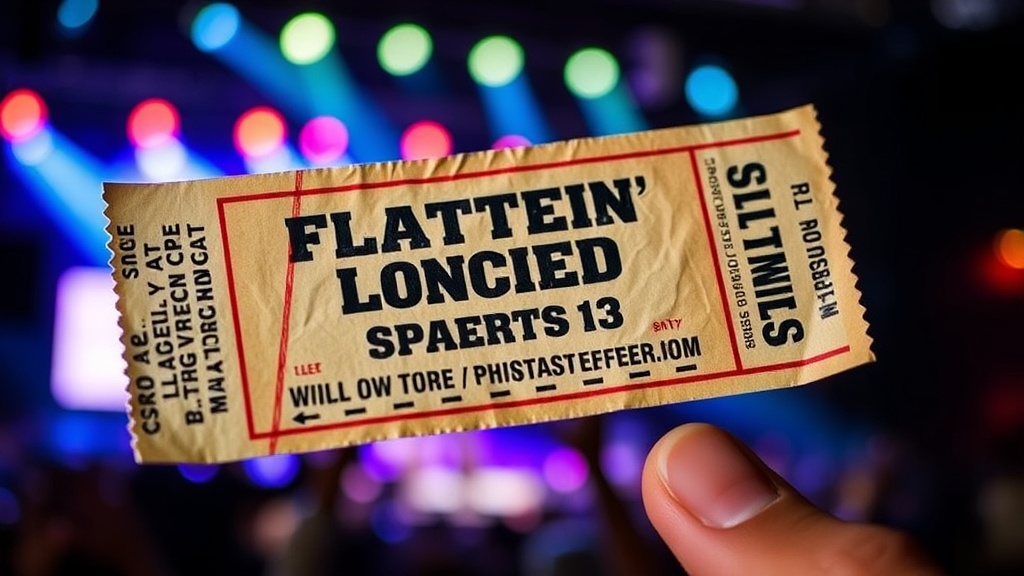
How to Flatten and Preserve Wrinkled Concert Ticket Stubs

This guide covers the complete process for flattening wrinkled concert ticket stubs and storing them so they stay intact for decades. Whether you've got a shoebox full of crumpled memories from the Savannah Civic Center or a few prized stubs from arena tours, the right techniques make the difference between fading scraps and a collection worth showing off.
What's the safest way to flatten a wrinkled concert ticket stub?
The safest method is a low-heat, gradual pressing process using a clothes iron and acid-free blotting paper. You'll want to avoid steam, direct heat contact, and any moisture that could reactivate old thermal ink.
Start by placing the wrinkled stub between two sheets of unprinted newsprint or acid-free blotting paper. Set an iron to the lowest heat setting — usually labeled "synthetic" or around 225°F. Press gently for three to five seconds, lift, and repeat. (Never glide the iron like you're pressing a dress shirt; that friction can smudge ink or tear brittle paper.) The goal is to coax the fibers back into place without shocking them.
For severely creased stubs, a book-press method works well as a follow-up. After the initial iron treatment, place the ticket inside a folded sheet of cardstock, then stack heavy books on top. Leave it for 48 to 72 hours. The catch? Thermal paper — common for tickets printed after 2000 — can darken or turn completely black if it gets too hot. If a stub feels glossy or has that faint chemical smell, test a tiny corner first.
What supplies do you need to restore and flatten ticket stubs?
You don't need a professional conservation studio. A basic restoration kit runs about $30 to $50 and covers most common damage.
Here's the thing — the wrong materials can do more harm than the wrinkles themselves. Regular copy paper contains lignin, which yellows over time and leaches into ticket stock. Plastic sandwich bags trap humidity and stick to thermal coatings. You'll want archivally safe products instead.
| Supply | Recommended Product | Purpose | Average Price |
|---|---|---|---|
| Blotting paper | Gaylord Archival Unbuffered Blotting Paper | Protects ink during pressing | $12–$18 per pack |
| Sleeves | BCW 3.5" x 5" Acid-Free Polypropylene Sleeves | Individual protection from dust and oils | $8–$12 per 100 |
| Storage pages | Ultra-PRO Platinum 8-Pocket Pages | Organized album storage for standard stubs | $10–$15 per 10-pack |
| Desiccant packs | Silica Gel Packets from Dry & Dry | Controls humidity in storage boxes | $10 per 50-pack |
| Microspatula | Dental pick or stainless steel spatula from Harbor Freight | Gently lifts folded edges without tearing | $5–$8 |
Worth noting: not every stub needs every supply. A modern Ticketmaster thermal print from a 2023 arena show benefits most from a sleeve and humidity control. A vintage 1975 Grateful Dead stub — likely printed on thicker card stock — can handle a bit more aggressive flattening and looks great in a rigid toploader.
How do you preserve concert ticket stubs long-term?
Long-term preservation comes down to controlling four factors: light, humidity, temperature, and handling frequency. Store stubs in a cool, dark place — ideally between 65°F and 70°F with relative humidity around 35% to 45%.
UV light is the silent killer of concert memorabilia. That sunny display shelf in your living room? It'll fade ink faster than you'd think — sometimes within a year. If you want to frame a stub, use UV-blocking glass (Museum Glass from Michaels works well) and keep the frame away from direct sunlight. For bulk storage, Gaylord Archival offers acid-free document boxes that block light and buffer against temperature swings.
Handling matters more than most collectors realize. The oils on fingertips transfer easily to porous paper and can darken edges over time. Cotton gloves — the kind used by stamp collectors — aren't overkill here. At minimum, handle stubs by the edges only. If you're sorting a large collection, work in short sessions. Fatigue leads to creases, drops, and the dreaded coffee spill.
For digital backup, scan stubs at 600 DPI on a flatbed scanner. Epson's Perfection V600 is a popular choice among collectors because it captures fine details without the harsh light of a smartphone flash. Save files as uncompressed TIFFs for archiving and keep cloud backups in at least two locations — Google Drive and an external SSD, for example.
Should you laminate concert ticket stubs?
No — lamination is almost always a mistake for collectible ticket stubs. The heat and adhesive from standard lamination pouches destroy thermal ink, trap moisture, and create a chemical reaction that yellows paper within five to ten years.
That said, there's one narrow exception. If a stub is already severely damaged — torn in half, water-stained, basically uncollectible as-is — some collectors use cold laminating film as a last-resort stabilization method. Even then, it's a personal choice, not a preservation best practice. The Library of Congress Preservation Division explicitly advises against heat-sealed lamination for paper documents of any kind.
A better alternative is encapsulation — slipping the stub into a sealed polyester sleeve (Mylar D) without adhesive. This gives the rigidity people often want from lamination, but it's completely reversible. You can remove the stub anytime with zero residue or heat damage.
Sorting and cataloging your collection
Once stubs are flattened and protected, organization turns a pile into a real collection. Sorting chronologically works for most people — it's satisfying to flip through years of shows in order. Genre sorting (rock, jazz, hip-hop, country) makes sense if your tastes are eclectic. Some collectors prefer venue-based organization — all your Johnny Mercer Theatre stubs together, all your Tybee Post Theater stubs in another section.
Cataloging apps like Discogs (which includes memorabilia tracking) or simple spreadsheet templates can log date, venue, artist, ticket price, and seat location. That metadata adds provenance — and if you ever sell or insure the collection, a detailed catalog is invaluable.
Dealing with special cases
Not all tickets are created equal. Vintage cloth tickets — sometimes called "ticket ribbons" from the 1960s and 70s — should never be ironed. Instead, roll them gently around a cardboard tube, cover with acid-free tissue, and let them relax over several weeks.
Stub-and-ticket combos (the full ticket with the stub still attached) are often too large for standard sleeves. BCW makes 5" x 7" toploaders that fit most full tickets comfortably. For oversized festival wristbands or laminated backstage passes, consider shadow-box storage with pins placed through non-critical areas — or better yet, display them in a shallow tray so nothing hangs by a single point.
Smell is a surprisingly common issue. Musty stubs — usually from basement storage or old venues with water damage — can be aired out in a container with activated charcoal (not baking soda, which is too abrasive if it contacts the paper). Leave them for two weeks, check the smell, and repeat if needed. Never apply liquid deodorizers or perfumes. Those chemicals bond with paper fibers permanently.
Collecting concert tickets is part memory-keeping, part curatorial discipline. The stub from that cramped club show in 1998 — the one where the sound cut out twice — carries a story that no smartphone photo can replace. With the right flattening technique, quality sleeves, and climate-controlled storage, those stories stay readable for the next generation of fans.
Steps
- 1
Assess the Condition and Choose the Right Flattening Method
- 2
Press the Tickets Flat Using Low Heat or Weight
- 3
Store the Restored Stubs in Acid-Free Sleeves or Albums