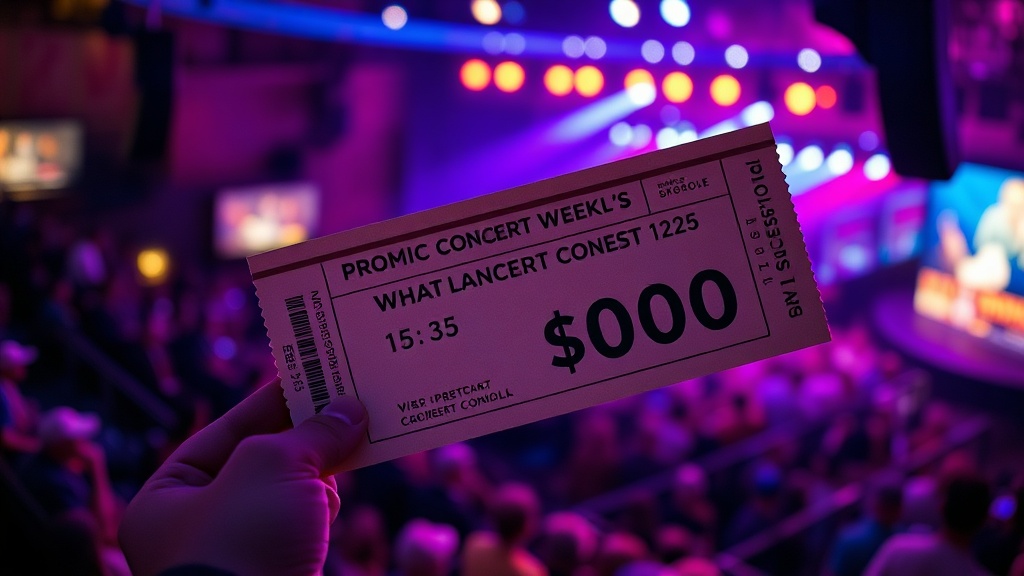
What Makes a $5 Stub Worth $500? The Hidden Economics of Concert Ticket Collecting

The global concert memorabilia market hit $4.2 billion in 2023—and paper ticket stubs now outsell signed posters at specialty auctions. That torn rectangle from a 1987 Prince show you stuffed in a shoebox? It might fund your next vinyl haul. Most collectors assume value comes from the famous names on the stubs. They're wrong. Condition, venue history, printing quirks, and even the smell of aged thermal paper drive prices more than the headliner.
This post explains what separates the $5 flea market finds from the $500 grails—and why some collectors pay more for a misprinted ticket than a pristine one.
Why Do Some Concert Tickets Appreciate While Others Stay Worthless?
The economics of ticket collecting follow patterns that would confuse any traditional investor. A Nirvana stub from a small club show often commands less than a perfectly preserved disco-era ticket from Studio 54. Why? Scarcity isn't just about age—it's about survival rates.
Tickets from the 1960s and early 1970s survive in shocking numbers. Venues used heavy cardstock, and fans treated them as keepsakes from the start. But the 1980s and 1990s? That's where the real scarcity hides. Thermal paper replaced cardstock. Venues switched to cheap, heat-sensitive rolls that fade to blank within months. A fully legible 1992 Jane's Addiction stub with intact thermal printing represents genuine rarity—maybe a few dozen survived out of thousands printed.
Printing method matters enormously. Rotogravure tickets—those with raised, tactile ink you can feel with a fingernail—command premiums. So do tickets with perforated stub portions that detach cleanly, proving the ticket was actually used rather than unsold stock. A torn stub with clean perforation edges beats a clean, untorn ticket every time. The tear tells a story.
Venue-specific quirks create micro-markets that surprise newcomers. The Fillmore East in New York used distinctive rainbow-colored tickets from 1968 to 1971. Collectors hunt specific color combinations that correspond to legendary shows. A pink-and-orange Fillmore stub from an Allman Brothers run in March 1971 recently sold for $890—not because of the band (though that helped), but because that specific color combination only appeared during their famous multi-night stand.
What Paper Types Should Collectors Actually Care About?
Not all vintage tickets age gracefully. Understanding paper stock separates informed collectors from those who overpay for damaged goods.
Cardstock tickets (1960s–1970s): These heavy, almost business-card-thick tickets hold color beautifully but suffer from edge wear and corner damage. Check for foxing—those brown spots that appear on old paper from acid migration. Light foxing adds character. Heavy foxing destroys value.
Thermal paper (1980s–2000s): The collector's nightmare. Heat, light, and plastic sleeves all accelerate fading. But here's the secret: not all thermal paper was created equal. Tickets from independent promoters often used higher-grade thermal stock than Ticketmaster's mass-produced rolls. A 1995 indie promoter ticket might still show perfect contrast, while a 2005 Ticketmaster stub faded to illegibility years ago.
Security paper (late 1990s–present): Modern tickets incorporate watermarks, holographic strips, and UV-reactive fibers. These features matter less for display purposes but matter enormously for authentication. A purported 1999 Woodstock '99 stub without the correct UV reaction pattern? Likely a reprint. Collectors should invest in a basic UV flashlight—the same tool museums use for document authentication.
Storage environment trumps material quality. Paper tickets stored in climate-controlled spaces (65–70°F, 30–40% humidity) maintain their condition indefinitely. Attic storage in Georgia summer heat? Even premium cardstock turns brittle within a decade. Margot's rule: if you're comfortable, your tickets are comfortable.
Which Printing Errors and Variants Are Worth the Premium?
Misprints fascinate collectors for the same reason misprinted stamps command fortunes—they're unique markers of human fallibility in mechanical systems. But not every error increases value.
Worth collecting: Date misprints where the wrong year appears (a 1978 ticket accidentally printed with 1977), venue name misspellings, and double-strikes where the printing press hit the paper twice, creating a ghost image. A 1984 Bruce Springsteen ticket with a double-printed date from the Born in the U.S.A. tour sold for $340 last year—roughly 15x what a standard stub from that tour fetches.
Not worth the cardboard they're printed on: Smudged ink from worn press rollers, crooked printing (unless dramatically askew), and tickets where someone hand-corrected an error. The market values mechanical errors, not human corrections. A ticket with a crossed-out date and a handwritten replacement loses authenticity appeal.
Color variations matter when they indicate limited print runs. The original Woodstock tickets came in multiple colors corresponding to different sales periods and entry gates. Blue tickets allowed three-day access and pre-date the event. Brown tickets were day-of-show sales at specific gates. Purple tickets? Those were artist and staff credentials—legitimate holy grails that rarely surface.
Provenance documentation doubles value for error tickets. A misprint without backstory is just damaged goods. A misprint with a letter from the original venue manager explaining the printing mishap? That's museum-grade material.
How Do You Spot Reprints and Forgeries?
The counterfeit ticket market exploded after 2020, when pandemic boredom drove new collectors into the hobby. Reproductions range from obvious (modern laser printing on aged paper) to sophisticated (scanned originals reprinted on period-correct stock). Here's what separates authentic stubs from expensive mistakes.
Font consistency: Vintage tickets used metal type or early photocomposition systems. Letter spacing varies subtly across authentic tickets. Modern digital reproductions show perfect kerning—uniform spacing that screams "computer." Compare suspect tickets against confirmed originals from the same venue and era.
Paper fiber structure: Authentic vintage tickets show laid lines—the parallel wire marks from early paper molds. Hold the ticket up to bright light and look for these faint horizontal shadows. Modern paper lacks this characteristic texture. Also check the tear pattern. Authentic perforated edges show micro-fraying—tiny paper fibers extending from the tear line. Clean, laser-cut edges indicate reproduction.
Ink penetration: Vintage printing ink soaked into paper fibers. Modern inkjet or laser printing sits on the surface. Use a 10x jeweler's loupe (every serious collector owns one) and examine the ink under magnification. Authentic vintage ink shows depth and fiber integration. Modern printing looks flat and sits atop the paper.
For high-value purchases—anything over $200—demand provenance documentation. Ideally, this means a chain of custody from the original attendee through subsequent sales. At minimum, require a detailed seller description with specific condition notes. Vague listings ("old concert ticket, looks vintage") warrant extreme skepticism.
The Professional Sports Authenticator (PSA) now offers concert ticket grading services, though many collectors prefer independent assessment by venue-specific experts. A PSA-graded ticket commands premium prices but loses the romantic immediacy of holding undocumented history. Your call.
When Should You Pay Premium Prices?
The ticket collecting market operates on emotional resonance as much as financial logic. A $500 stub from your first concert represents better value than a $50 stub from a show you never attended, even if the latter has better resale potential. Collect what moves you—but understand when emotion clouds judgment.
Premium prices justify themselves for:
- Tickets from venues that no longer exist (especially those demolished rather than renovated)
- Documentation of historic performances—debut shows, final shows, or concerts with documented setlist peculiarities
- Tickets with exceptional provenance—original owner photos, wristbands, or venue-specific ephemera included
- Condition rarities—the only known surviving pristine example of a normally degraded paper type
Avoid premium prices for:
- "Investment grade" tickets marketed to non-collectors (if they're selling it as an investment, it isn't one)
- Trending artists whose prices spike temporarily (last year's hot ticket cools fast)
- Any ticket where the seller can't explain exactly what makes it special
The most valuable ticket in your collection might be worthless to anyone else—and that's perfectly fine. A $5 stub from a forgettable 1994 show at a Savannah club that closed the following month? For Margot, that's irreplaceable documentation of a specific moment in local music history. The economics matter, but the story matters more.
"The tear tells a story." — Unwritten collector's creed
Start hunting with your eyes open, your loupe ready, and your skepticism engaged. The next $500 stub might be priced at $5 because the seller doesn't know what they have. Or it might be a $5 stub forever. That's the game—and it's why we keep digging through dusty bins at estate sales, hoping for the ghost of a great night to surface one more time.